
From Coastal California to African Game Reserves
One Conservationist's Journey
Every great conservation story begins with a single trail. For Andrew Quraishi, that trail wound through the Purisima Creek Redwoods behind Half Moon Bay, California — where a young explorer first learned to read landscapes, track wildlife, and respect the quiet authority of the natural world.
Foundations...
Andrew's formal journey into wildlife science began at Humboldt State University in Arcata, California, where he studied wildlife biology and earned both the Dean's List and President's Honor Roll distinctions. Surrounded by renowned biologists and the ancient redwood ecosystems of Northern California, Andrew's ambition crystallized: he wanted to go to the source — to work with African wildlife on African soil, where the scale of conservation challenges demanded bold, field-tested solutions.
Into Africa...
In South Africa, under the mentorship of Anton Hendriksz, Andrew immersed himself in the full spectrum of field conservation — completing multiple training courses spanning ecotourism, professional guiding, and conservation operations. In October 1996, he completed the rigorous practical examination as a Professional Hunter at the South African National Professional Hunting School in Sterkrivier, Northern Province. The following year, he earned the EcoTraining Game Ranging Diploma in Southern Africa, excelling in both theory and practical components. His instructors noted his intelligence, dedication, and strong potential for a distinguished career in wildlife conservation.
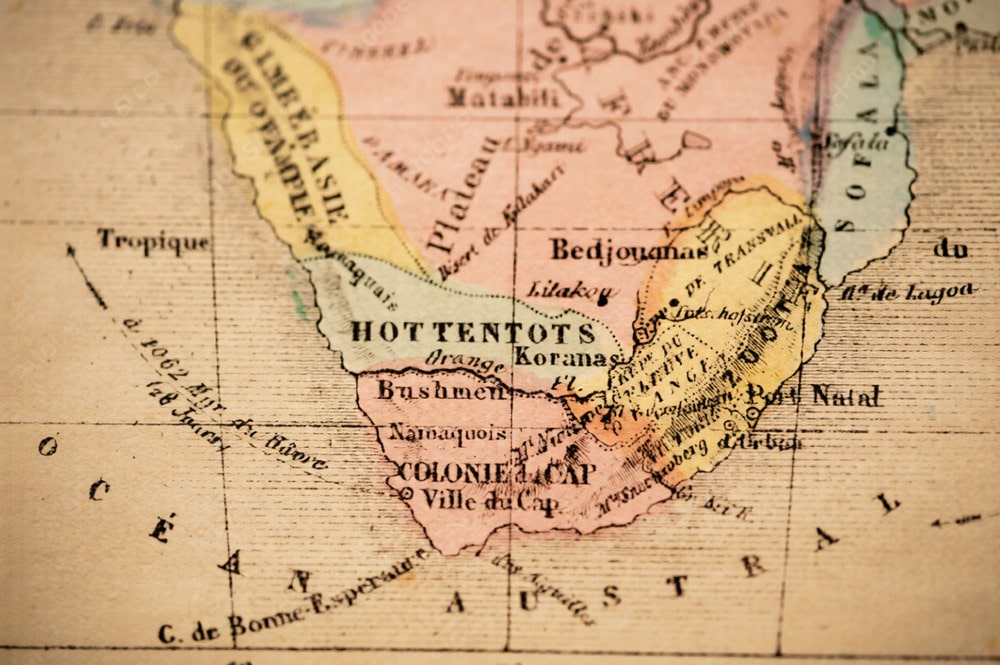
The Zulu Province
Andrew was accepted into the University of KwaZulu-Natal's wildlife science program by Dr. Pete Zacharias, where he studied the foundational principles of land management, conservation biology, and wildlife population curation from 1997 to 2000. He graduated with Honors, completing a dissertation on the population status and human-wildlife conflict dynamics of the Chacma baboon (Papio ursinus) in Umtamvuna Nature Reserve — research that combined rigorous field methodology with practical recommendations for multi-stakeholder conservation planning.
Theory Meets the Wild
Always eager to return to the field, Andrew was offered a position at Mkuze Game Reserve by Graham Kheet, its chief conservator, initially working to educate young people about the wild. He was soon commissioned as an Honorary Game Ranger by the Natal Parks Board (now Ezemvelo KZN Wildlife). Under the mentorship of veteran ranger Paul Jennings, Andrew's responsibilities expanded rapidly — from leading dangerous-game walking safaris and night-drive tours to conducting anti-poaching patrols, supporting game capture operations, managing habitats, and spearheading community outreach programs. Between 1998 and 2000, these experiences forged a deeply practical understanding of what conservation truly requires: discipline, risk awareness, community trust, and relentless field presence. Concurrently, Andrew served as a Wildlife Technician at the University of Natal, assisting with the monitoring of Cape parrot feeding and breeding habits across patches of yellowwood forest in the Eastern Cape Province — work that reinforced his commitment to species-level fieldwork and ecological research.
Human - Wildlife Coexistence
In 2000, Andrew undertook dedicated wildlife research at Umtamvuna Nature Reserve under the Natal Parks Board. Using non-linear transect methodology, he monitored the population status of the Chacma baboon, evaluated species-specific economic losses to regional sugarcane and banana production, and developed a model illustrating population dynamics under different management regimes. His recommendations included a multi-stakeholder conservation plan to mitigate human-wildlife conflict and protect crop production & wildlife — an early demonstration of the integrated approach that would later define his career.
Out of Africa...
Between 2000 and 2002, Andrew returned to the United States and served as an Environmental Resource Coordinator at TRC Essex Environmental in Half Moon Bay. There, he coordinated environmental compliance for linear construction projects under CEQA & NEPA standards — managing resource permitting, pre-construction wildlife assessments, crew training, and regulatory reporting. This experience broadened his understanding of environmental governance frameworks in a developed-country context.
The North - Stillness in Motion
In late 2002, Andrew was accepted to the Royal Veterinary and Agricultural University (KVL) in Copenhagen, Denmark, to pursue a Master of Science in Agricultural Development. He graduated with Distinction in 2005, producing a dissertation titled "Breaking bad habits: re-thinking linkages for wildlife conservation and rural development in sub-Saharan Africa." During his academic career, Andrew was honored as a Wildlife Conservation Society Research Fellow and received the World Wildlife Fund for Nature Research Award, and the KVL Agricultural Development Research Award. He also earned a SLUSE Certificate in Sustainable Land Use and Natural Resource Management.
Conservation Meets Enterprise
From 2004 to 2005, Andrew served as the lead researcher at Wildlife Works' Rukinga Wildlife Sanctuary in Kenya's Tsavo ecosystem. There, he evaluated a pioneering private-enterprise approach to linking conservation with rural development needs in communities adjacent to Tsavo East National Park. He designed and implemented a wildlife and resource monitoring system, supervised four project field members, and managed a research budget in compliance with WCS, WWF, and KVL grant policies. His article on the project was accepted for publication by Oryx, the International Journal of Conservation — a milestone that demonstrated his capacity to unite rigorous science with community empowerment at a landscape scale.
Transforming Communities Across KwaZulu-Natal
Recognizing that true conservation must uplift both people and nature, Andrew took on the role of Provincial Project Coordinator and Executive Assistant at Themba Enterprises in KwaZulu-Natal from 2005. He planned, secured funding for, and implemented development projects for schools, sports facilities, and small-to-medium enterprises in rural African communities — proving that conservation is most powerful when it fosters thriving communities alongside healthy ecosystems.
The Missing Link - Technology
Andrew Quraishi is an executive technologist and architect whose career began in 2003 at TDC TeleDanmark, where he first developed a foundation in telecommunications and enterprise systems. Over the past two decades, he has led the design of scalable data, cloud, and AI platforms—helping organizations modernize and operate with precision at scale. Today, through Soverion Wild, Andrew extends that same systems-driven approach beyond the enterprise, applying technology, data insight, and strategic thinking to land, sustainability, and the stewardship of real-world environments.
Landscape Intelligence
Today, Andrew brings this entire arc — from California’s coastal foothills to Southern Africa’s reserves — into Soverion Wild. Applying a systems-driven mindset from his technology career, he brings intelligence to the conservation landscape to enable true coexistence between people, land, and ecosystems.
Built on field realism, measurable outcomes, and the belief that conservation must uplift both wildlife and communities, Soverion Wild modernizes conservation through field-ready technology, practical consulting, and community-anchored initiatives—helping teams act faster, operate safer, and prove real impact for generations to come.
ON THE MAP
© 2025 Soverion Wild